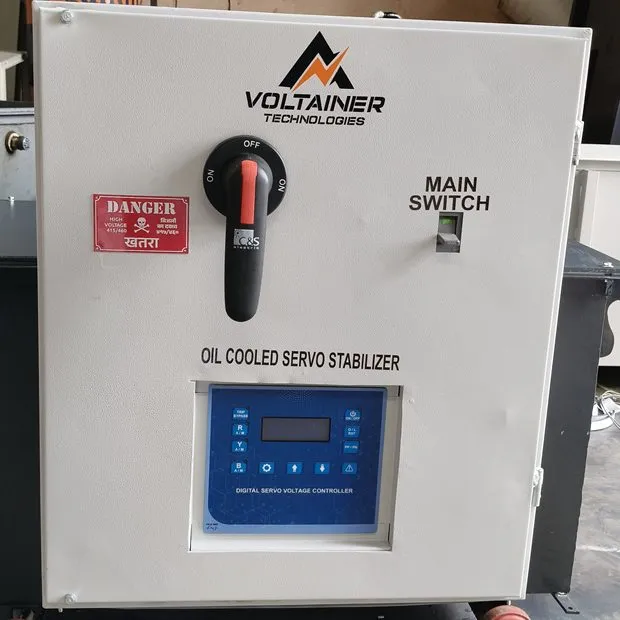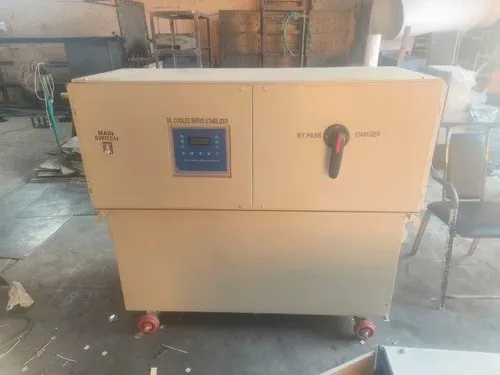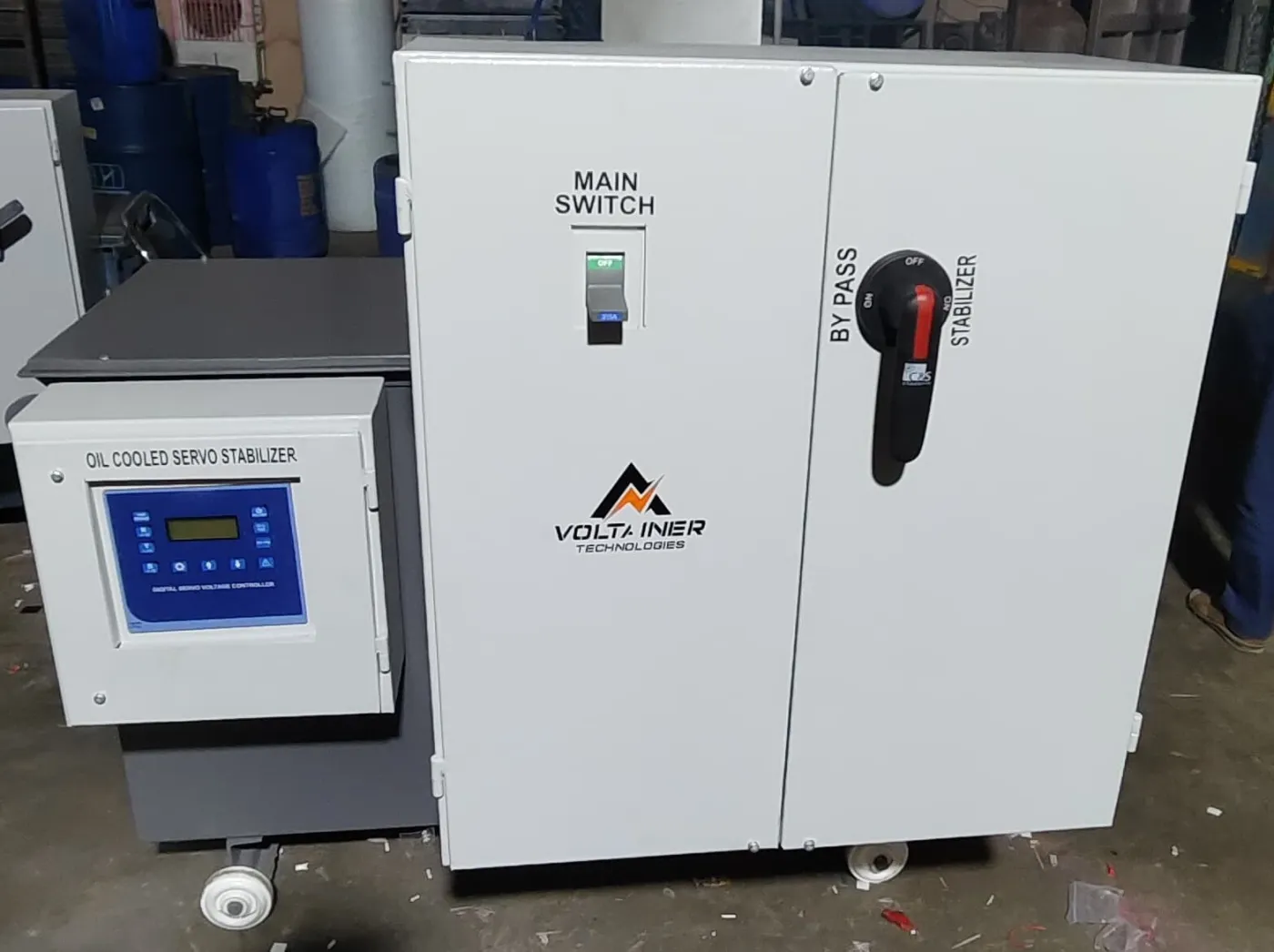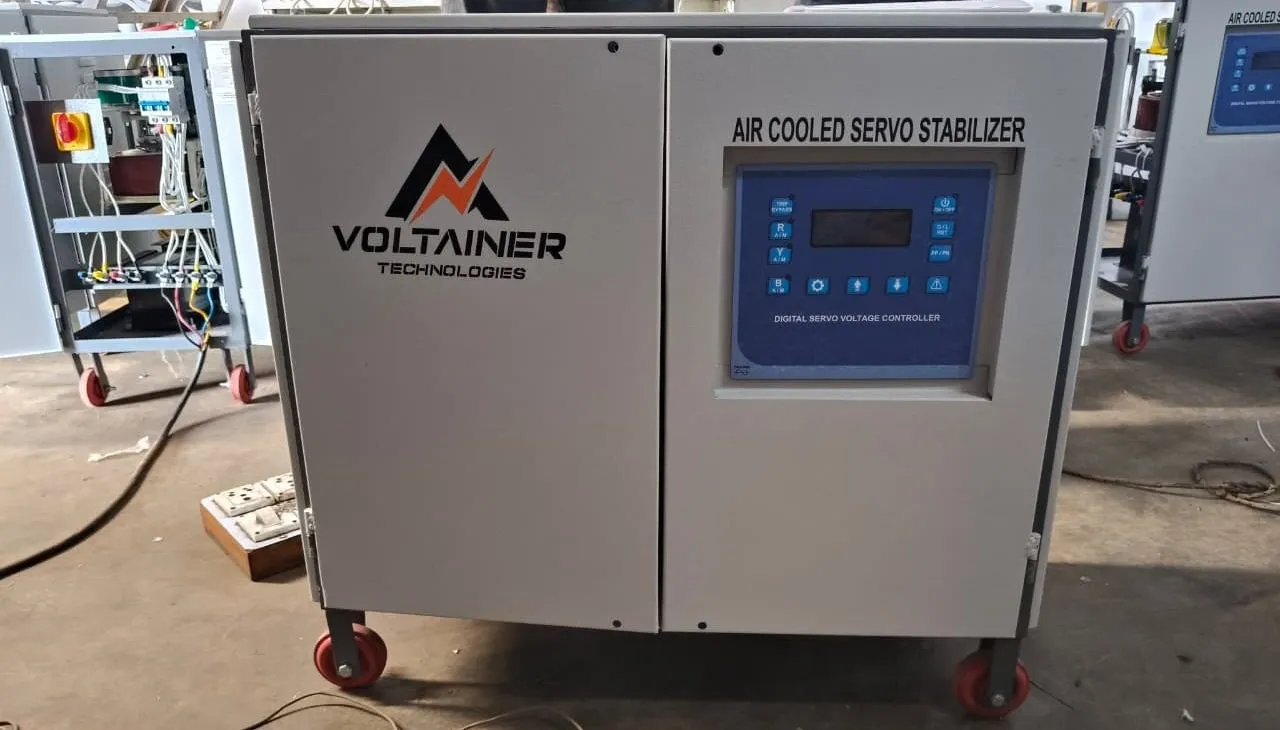
A servo stabilizer (or servo voltage stabilizer) is an automatic voltage regulator that keeps the voltage supplied to your equipment steady, even when the incoming grid voltage rises or falls.
Why voltage stabilization matters
Electrical equipment is designed to run at a rated voltage — typically 230 V single phase or 415 V three phase in India. In practice, supply voltage often varies widely through the day, especially at the end of long feeders and in industrial estates. Low voltage causes motors to draw more current and overheat; high voltage stresses insulation and electronics.
What a servo stabilizer does
A servo stabilizer measures the output voltage continuously. When it drifts from the set value, a servo motor moves a variable transformer (variac), which adds or subtracts voltage through a buck-boost transformer. The output is held within about ±1% of the set value.
Where they are used
- Factories and production lines
- CNC and injection moulding machines
- Hospitals and diagnostic centres
- Commercial buildings, lifts and HVAC
- Data and server rooms
If your equipment suffers from frequent trips, overheating or unexplained failures, a correctly sized servo stabilizer is often the most cost-effective fix.